COURSE 1
Essentials of Automation for Manufacturing
37 Modules | 3 hours per module
This course was developed by automation experts who work in the Life Sciences industry, was reviewed by SMEs from Merck, Genentech, as well as our academic partners, and links to the Automation Competency Model by the Automation Federation.
This course offers
- N Access from any device
- NCertificate of completion
- N3 hours online course content per module ( 37 modules)
$5,550.00
Module aims and objectives
Automation Competency Model
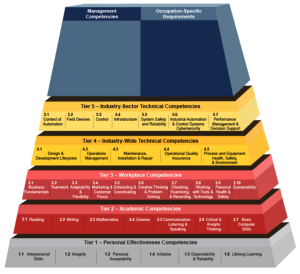
The Automation Competency Model is a resource that provides a comprehensive collection of the competencies – the knowledge, skills, and abilities – required in the automation industry. The competencies are described using examples of the critical work functions and the technical content common to the industry. A competency describes a behavior but does not describe a level of performance, as different workers will need different levels of competence to complete their job functions.
The model is depicted in a graphic consisting of several tiers. Each tier is comprised of blocks that group the knowledge, skills, and abilities essential for successful performance in the industry. At the base of the model, the competencies apply to a large number of occupations and industries. As a user moves up the model, the competencies become industry- and occupation-specific. The pyramid shape does not imply that competencies at the top are at a higher level of skill. Instead, the model’s shape represents the increasing specialization and specificity in the application of skills.
Tiers 1 through 3, called Foundation Competencies, form the foundation needed to be ready to enter the workplace.
Tier 1 – Personal Effectiveness Competencies represent personal attributes or “soft skills”. Essential for all life roles, personal effectiveness competencies are generally learned in the home or community and reinforced at school and in the workplace.
Tier 2 – Academic Competencies are critical competencies primarily learned in a school setting. They include cognitive functions and thinking styles, and are likely to apply to most industries and occupations.
Tier 3 – Workplace Competencies represent motives and traits, as well as interpersonal and self-management styles honed in the workplace. They are generally applicable to a large number of occupations and industries.
Tiers 4 and 5 show the cross-cutting industry-wide technical competencies needed within an industry wherein a worker can move easily across industry sub-sectors. Rather than narrowly defining a single occupational career ladder, this model supports the development of an agile workforce.
Tier 4 – General Technical Competencies represent the basic knowledge and skills that are common across automation sectors.
Tier 5 – Specific Technical Competencies represent advanced competencies that are specific to automation. The upper tiers represent the occupational specialization within the industry.
Section A: Context of Automation
- What is the Life Sciences industry?
- What is automation?
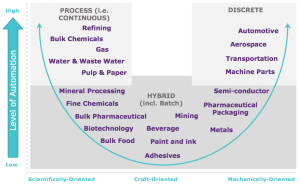
- What is automation for Life Sciences manufacturing?
- What standards relate to automation systems design and operation?
- What is the future of automation for Life Sciences manufacturing?
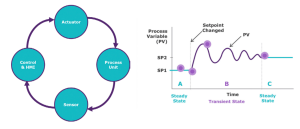
Section B: Measurement, Sensors, and Actuation

Section C: Control
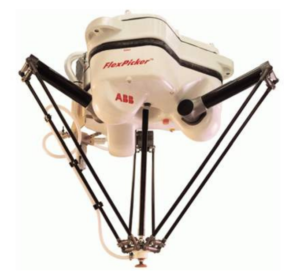
This module aims to give you a clear understanding of the concepts behind industrial robotics.
The learning objectives of this module are that you will be able to explain:
- How robots are utilized in industrial applications
There are 2 performance objectives for this module:
- Demonstrate an understanding of the variety of applications for industrial robotics
- Research and make a recommendation for a suitable industrial robot for a set of stated requirements
Section D: Communication, Integration, and Software
This module aims to give you a clear understanding of the principles behind industrial networks and network configuration.
The learning objectives of this module are that you will be able to explain:
- the benefits of both cable and wireless networks
- network component configuration
- network diagnostics and network management
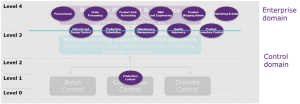
This module aims to introduce you to the concepts behind Manufacturing Operations Management (MOM) and how it relates to other concepts such as digital thread, digital twin, and Manufacturing Execution Systems.
The learning objectives of this module are that you will be able to define or describe:
- Manufacturing Operations Management activities
- The typical business drivers for integration of systems
- The six parts of the International Society of Automation (ISA) ISA-95 standard
- The level 3-4 boundaries and information flows
- Manufacturing Operations Functions
- Information flows from the enterprise domain functions to the control domain functions and vice versa
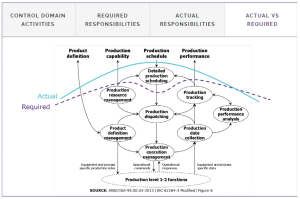
This module aims to introduce you to Manufacturing Execution Systems and how decisions are made regarding which systems should be governed by the control domain (i.e. Production and Operations) or the enterprise domain (i.e. Business).
The learning objectives of this module are that you will be able to explain:
- the variety of computer systems used for manufacturing
- how control responsibility can be defined
- sample lines of technical integration (ie. how systems will be implemented along boundary lines)
- what typical MES vendors have to offer
- enterprise asset management
Section E: Automation System Safety and Reliability
Section F: Industrial Control Systems Cybersecurity
This module aims to give you a clear understanding of the concepts behind Networks, with a focus on Industrial cyber security.
The learning objectives of this module are that you will be able to explain:
- Introduction to Industrial Networks
- Separation of OT and IT network components
- Zones, Conduits and Security levels
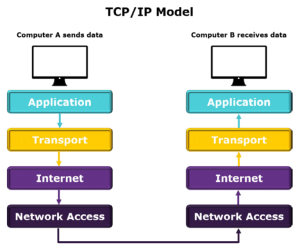
This module aims to give you a clear understanding of concepts behind information
assurance.
The learning objectives of this module are that you will be able to explain:
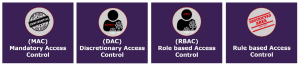
- Identity management and Access Control.
- The three elements of the CIA triad: Data Integrity, Data Confidentiality and Resource Availability.
- The basic operation of event management
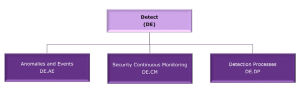
This module aims to give you a clear understanding of concepts behind the NIST
Cyber Security Framework in relation to providing a common language to the Cyber Security lifecycle.
The learning objectives of this module are that you will be able to explain:
- The NIST Framework key elements- Core, Profile, and Implementation tiers
- The five Functions of the NIST Framework
- The structure of the Framework core
- The most commonly used Informative References of the NIST Framework